There's a special sort of frustration that comes from reading yet another productivity article that suggests you simply need to prioritise better or break tasks into smaller chunks. If you have ADHD, or if your brain just refuses to cooperate with conventional organisational systems, you've probably tried these things. Multiple times. With increasingly elaborate folder structures and colour-coded spreadsheets that you've abandoned by Wednesday.
The problem isn't that you're doing it wrong. The problem is that most productivity advice assumes a brain that experiences time in a linear fashion, finds satisfaction in ticking off lists, and can simply decide to focus on something boring because it's important. For many people, that's not remotely how things work.
Why the standard advice fails
Traditional productivity systems often rely on delayed gratification, abstract importance, and the ability to do things you don't want to do simply because you've written them down. If your brain doesn't reliably produce dopamine from these sources, you're essentially being handed a map written in a language you don't speak.
The Eisenhower Matrix, for instance, wants you to focus on things that are important but not urgent. That's a lovely idea, except "important but not urgent" translates in many brains to "completely invisible until it becomes a crisis." Filing systems with nested folders require you to remember where you put things and to consistently apply the same logic each time. GTD-style contexts assume you can look at a list of phone calls and simply start making phone calls, regardless of whether your brain currently considers that an acceptable activity.
None of this makes you lazy or disorganised. It means your brain is working with a different operating system, and you need different tools.
Make things visible
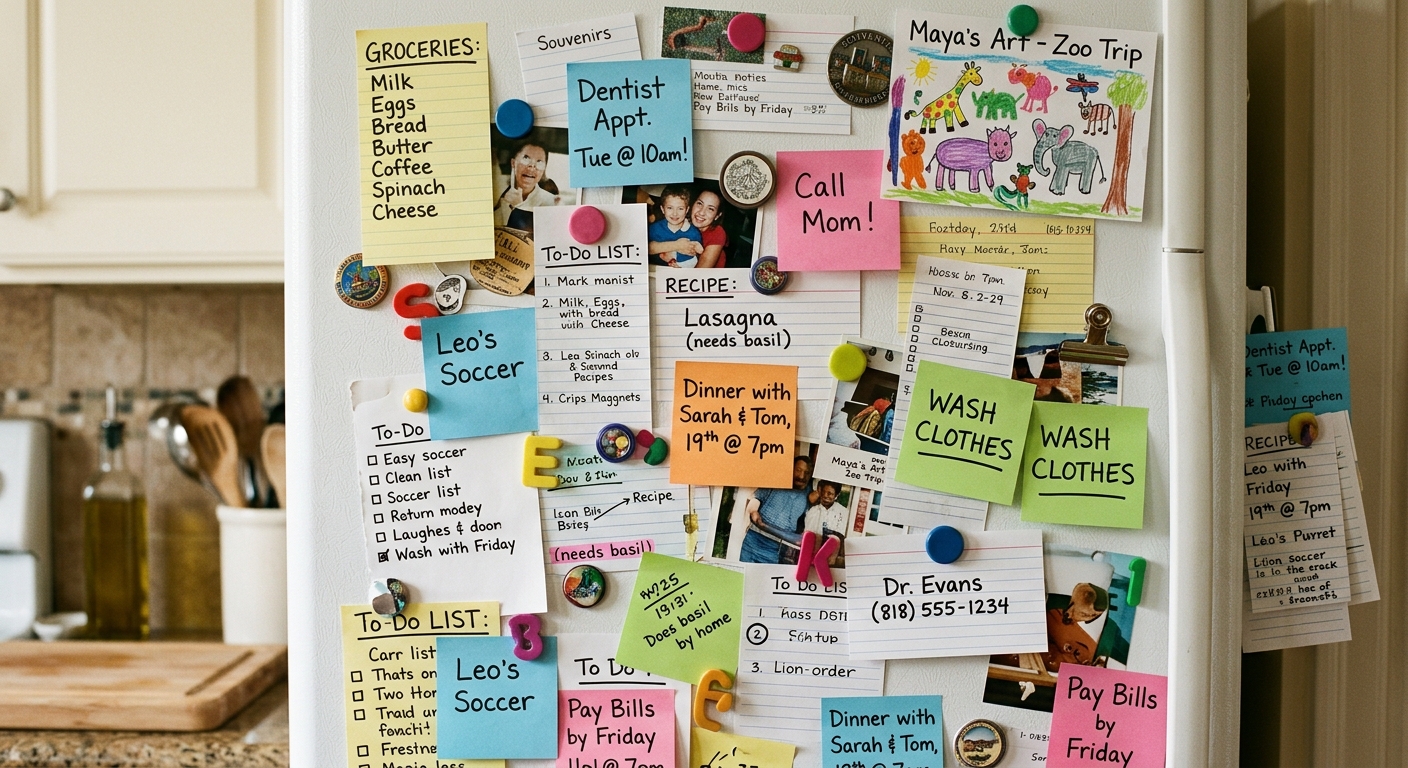
Out of sight is out of mind, and out of mind might as well not exist. This is why that important document you carefully filed in a logical location has vanished into the ether, whilst the random post-it note stuck to your monitor gets dealt with immediately.
Rather than fighting this, use it. Keep current projects physically visible. A simple folder on your desktop labelled "Doing Now" works better than any amount of nested organisation if it means you actually see the files when you sit down. Physical trays on your desk, even if they look a bit cluttered, often work better than drawers. A whiteboard with your three main tasks beats a comprehensive digital system you never open.
The point isn't to have everything visible—that way madness lies—but to accept that if something needs doing this week, it probably needs to be in your eyeline. Yes, this might mean you have more things on your desk than minimal-aesthetic Instagram would approve of. You'll cope.
Reduce friction to essentially nothing
Every extra step between you and starting a task is another opportunity for your brain to wander off and do something else. If you need to open three applications, find a file, and remember a password before you can begin, you're asking for trouble.
Set things up so that starting is as easy as possible. Keep templates for regular tasks already open. Have your most-used tools one click away. If you always lose your place in long documents, keep a text file that just says where you're up to. If you need certain information to complete a task, write it at the top of the relevant document so you don't have to go hunting.
This might feel like you're accommodating weakness, but you're actually being efficient. Every bit of mental energy you save on finding things or remembering steps is energy you can use for actual work.
Build variety into your day
The idea that you should batch similar tasks together and work in focused blocks makes perfect sense for some brains. For others, it's a recipe for staring at the wall after twenty minutes. If you find yourself unable to do the same type of work for extended periods, stop trying to force it.
Instead, deliberately plan for variety. Alternate between different types of tasks. Do something that requires deep focus, then something administrative, then something creative. If you're losing momentum, switch to a different project rather than pushing through. You're not being indulgent; you're working with your brain's natural need for novelty and stimulation.
The work still gets done. It just gets done in a different order, and that's fine.
Use urgency deliberately
Yes, relying on deadlines and last-minute pressure isn't ideal. It's also, for many people, the only thing that reliably works. Rather than feeling bad about this, you can make it work better.
Create artificial urgency for things that don't have natural deadlines. Tell someone you'll send them a draft by Friday. Book a meeting that requires preparation. Set a timer and commit to working on something until it goes off. These aren't "hacks" — they're you understanding what your brain responds to and creating those conditions intentionally.
The goal isn't to eliminate deadline-driven work (you probably can't), but to have some control over when those deadlines hit, rather than letting everything become a crisis simultaneously.
Accept that systems will break
Here's the uncomfortable truth: whatever organisational system you set up will probably stop working at some point. You'll stop looking at your task board. The folder structure will become a mess. The daily review habit will quietly die.
This isn't failure. This is normal. Rather than trying to find the one perfect system you'll maintain forever, accept that you'll need to periodically reset things. When you notice a system has stopped working, don't try to force yourself back into it. Set up something new, even if it's barely different from the old thing. Sometimes the act of reorganising is itself enough to re-engage your brain.
Keep your systems simple enough that resetting them doesn't require a full day of reorganisation. If tidying up your task management system is itself a task you'll avoid, you've made it too complicated.
Find your actual working patterns
Productivity advice often comes with an implied schedule: start early, do your most important work first, maintain steady focus throughout the day. But if you consistently can't work effectively before 11am, or if your best thinking happens at 9pm, or if you work best in short bursts scattered throughout the day, that's valuable information.
Notice when you naturally have energy and focus, and protect that time for work that needs it. Notice what time of day you're useless for anything except answering emails, and just do that then. If you work well in cafes but not at a desk, that's fine. If you need background noise, or silence, or to stand up, or to doodle whilst thinking—these aren't quirks to overcome, they're your actual working requirements.
You might not be able to structure your entire life around your ideal conditions, especially if you have a traditional job with fixed hours, but even small adjustments help. Do the difficult thing when your brain works, not when the productivity book says you should.
One thing at a time (sort of)
The advice to single-task is everywhere, and it's not wrong exactly, but it misses something important: for some brains, having multiple things on the go actually works better. Not multitasking in the sense of doing several things simultaneously, but having several projects active so you can switch between them.
If you get stuck or bored with one task, having another legitimate thing to switch to means you're still being productive, rather than falling down an internet rabbit hole. The trick is distinguishing between useful task-switching and just avoiding things. If you're rotating between three projects and they're all moving forward, that's working. If you're "switching tasks" twelve times an hour and nothing's getting done, that's different.
Be specific about next actions
Here's one piece of standard advice that actually does help: being very specific about what you need to do next. Not "work on report" but "write three bullet points about the methodology section." Not "sort out invoicing" but "open the spreadsheet and add last week's hours."
Vague tasks create friction because you have to figure out what they mean before you can start. Specific next actions mean you can just begin without thinking. This is particularly useful if you're writing things down at the end of the day for tomorrow: future you doesn't want to deal with ambiguity.
Good enough is fine
If your brain tends toward all-or-nothing thinking, you probably have a collection of abandoned projects that weren't quite perfect, or tasks you haven't started because you can't do them properly right now. This is a trap.
Most things don't need to be perfect. They need to be done. A slightly messy filing system that you actually use beats a pristine one you don't. Notes that exist are better than comprehensive notes you never get around to making. Finishing things badly often teaches you more than endlessly preparing to do them well.
This doesn't mean doing shoddy work. It means recognising that sometimes done is better than perfect, and that starting badly is better than not starting at all.
Useful answers
Frequently asked questions
- Why don't normal productivity systems work for me if I have ADHD?
- Traditional productivity systems rely on delayed gratification, abstract importance, and the ability to focus on boring tasks just because they're written down. If your brain doesn't produce dopamine from these sources reliably, you're essentially using tools designed for a different operating system.
- Is it bad that I only get work done when there's a deadline?
- No, it's actually how many brains naturally work. Instead of feeling guilty, create artificial urgency intentionally—tell someone you'll send them something by a specific date, book a meeting that needs preparation, or set a timer. The goal is controlling when deadlines hit rather than letting everything become a crisis at once.
- How can I stop abandoning tasks because they're not perfect?
- Recognize that most things need to be done, not perfect. A messy filing system you actually use beats a pristine one you don't, and finishing things badly often teaches you more than endlessly preparing to do them well. Done is genuinely better than perfect in most cases.